
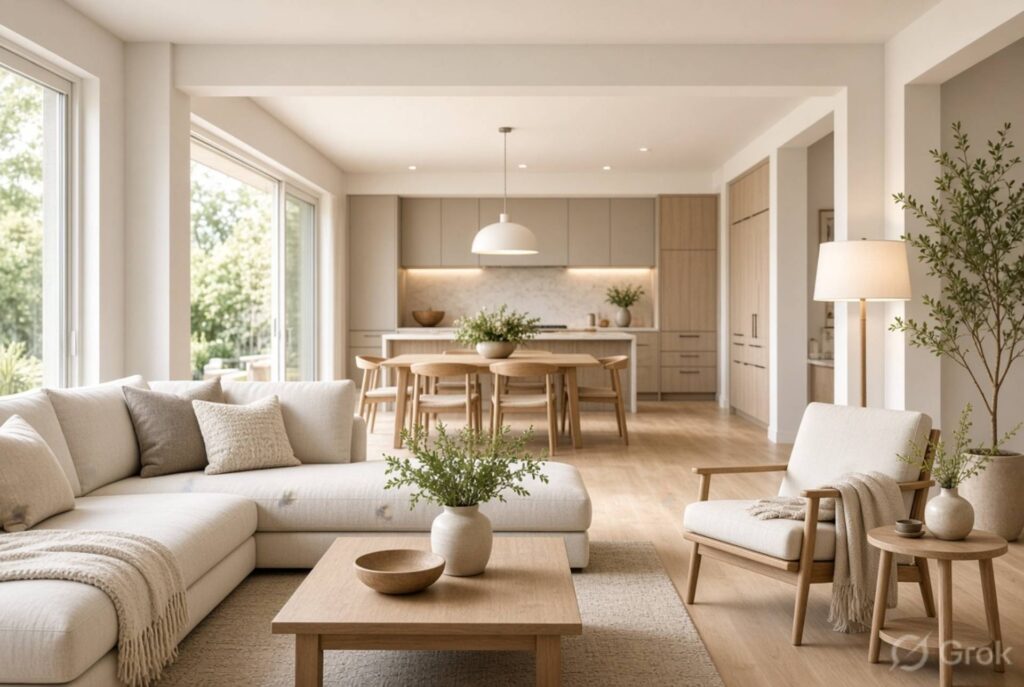
A beautiful home is not about making every room look the same. It is about creating a sense of connection so that each space feels like part of the same story.
A cohesive home interior uses colour, materials, furniture, lighting, flooring, and decorative details to create visual continuity. At the same time, each room can have its own personality and purpose.
The key is knowing what to repeat, what to vary, and where to create contrast.
Whether you are decorating a compact apartment, updating a traditional family home, furnishing a rental property, or planning a luxury interior, the same basic principles can help every room feel naturally connected.
What Does a Cohesive Home Interior Mean?
A cohesive interior is one where different rooms work together visually and functionally. You can move from the living room to the kitchen, hallway, bedroom, or dining area without feeling that you have entered a completely unrelated space.
Cohesion does not mean using the same furniture, colours, or décor everywhere. Instead, it comes from repeating selected elements while allowing enough variation to keep each room interesting.
Think of your home as a collection of chapters. Each room should have its own character, but the overall design should feel like one complete book.
Start With a Whole-Home Design Direction
Before choosing paint colours or buying furniture, decide what you want your home to feel like.
Your design direction might be:
- Warm and relaxed
- Modern and refined
- Minimal and calming
- Traditional and welcoming
- Contemporary and artistic
- Natural and understated
This does not mean choosing one strict interior design style. It simply gives you a reference point when making decisions.
For example, a home inspired by warm modern design might combine natural wood, soft neutrals, simple furniture, textured fabrics, and understated lighting. Those elements can appear differently in each room while still creating a consistent design language.
Build a Consistent Colour Story
Colour is one of the easiest ways to connect separate rooms.
You do not need to paint the entire house the same colour. Instead, create a colour family that can move naturally from one space to another.
A simple approach is to choose:
- One main neutral for larger surfaces.
- One or two supporting colours for furniture and textiles.
- A few accent colours for artwork, cushions, accessories, or smaller features.
For example, warm white walls could flow into beige, muted green, terracotta, or natural wood tones in adjoining rooms.
The colours do not have to match perfectly. They simply need to relate to one another.
Use Colour Through Repetition
If a muted green appears in the living room, you could repeat a similar tone through a bedroom cushion, artwork in the hallway, or kitchen accessories.
This creates rhythm without making the home feel overly coordinated.
Create Continuity With Flooring
Flooring has a major visual impact because it covers large areas.
Using the same flooring throughout connected spaces can make a home feel larger and more unified. This is particularly effective in open-plan apartments and smaller homes.
However, using different flooring is perfectly acceptable when the transition is intentional.
For example:
- Wood flooring can connect the living and dining areas.
- Tiles can define the kitchen or bathroom.
- A patterned rug can visually separate a seating area without breaking the overall flow.
When changing flooring materials, consider their colour, warmth, texture, and visual weight. Two completely unrelated flooring choices can make adjoining rooms feel disconnected.
Repeat Materials and Finishes
Materials can create a subtle connection between rooms.
If your living room includes oak furniture, consider carrying a similar wood tone into the dining area or bedroom. If brushed metal appears in your lighting fixtures, repeat that finish in cabinet handles or smaller accessories.
Useful recurring materials include:
- Natural wood
- Stone
- Metal
- Glass
- Linen
- Wool
- Ceramic
- Leather
The goal is not to use every material everywhere. Select a few that define your home’s visual identity and repeat them thoughtfully.
Pay Attention to Furniture Style
Furniture does not need to come from the same collection.
In fact, matching every piece too closely can make a home feel like a showroom.
Instead, look for common characteristics such as:
- Similar proportions
- Related wood tones
- Consistent shapes
- Complementary upholstery
- Similar levels of visual weight
- A shared design period or influence
For example, a contemporary sofa can work beautifully with a vintage wooden coffee table if both pieces have balanced proportions and connect with other elements in the room.
Understand Balance and Proportion
Good interior design is strongly influenced by balance and proportion.
A large sofa may overwhelm a small living room, while tiny furniture can look lost in a spacious room. Similarly, a large artwork above a narrow console may feel visually heavy.
Before purchasing furniture, consider the size of the room and the surrounding elements.
Ask yourself:
- Is the furniture appropriately scaled?
- Is there enough space to walk comfortably?
- Does one side of the room feel heavier than the other?
- Are large pieces balanced with smaller details?
- Does the furniture arrangement support how the room is used?
Good proportions make a home feel comfortable before you consciously understand why.
Use Rhythm to Connect Spaces
Rhythm is created when certain visual elements appear repeatedly throughout the home.
This could be a particular shape, material, colour, texture, or finish.
For instance, curved forms might appear in a living room mirror, dining chairs, bedroom lighting, and hallway accessories.
You can also create rhythm through:
- Repeated wood tones
- Similar lighting finishes
- Consistent door hardware
- Repeated textile colours
- Related artwork styles
- Similar geometric patterns
The repetition should be noticeable but not predictable.
Give Every Room a Focal Point
A cohesive home still needs moments of interest.
Each room should have a focal point that attracts attention. It might be a fireplace, artwork, statement light, feature wall, architectural detail, or beautifully styled piece of furniture.
The trick is to avoid making every room compete for attention.
If the living room has a dramatic artwork collection, the dining room might use a sculptural pendant instead. The bedroom could focus on an upholstered headboard or textured wall.
This creates visual hierarchy throughout the home.
Connect Open-Plan Spaces Without Making Them Identical
Open-plan homes require careful planning because several functions often share one large area.
Instead of giving the kitchen, dining area, and living room completely different identities, create subtle connections.
For example:
- Repeat the same wood tone across cabinetry and furniture.
- Use related colours in upholstery and kitchen accessories.
- Choose lighting fixtures with complementary finishes.
- Use rugs to define separate zones.
- Keep major furniture pieces within a consistent style family.
Each zone can have a different purpose while still feeling like part of one room.
Traditional Homes Need Flexibility
Traditional homes often have architectural details such as mouldings, fireplaces, timber floors, arches, or decorative doors.
Use these features as part of your design foundation rather than trying to hide them.
Modern furniture can work alongside traditional architecture when the colours, proportions, and materials are carefully balanced.
For example, a classic fireplace can sit comfortably with a simple contemporary sofa and modern lighting. The contrast adds character while the repeated materials and colours maintain cohesion.
Designing a Cohesive Rental Home
Rental properties often come with limitations. You may not be able to change flooring, lighting, wall colours, or cabinetry.
You can still create a connected interior through movable elements.
Focus on:
- Rugs
- Curtains
- Cushions
- Throws
- Artwork
- Mirrors
- Lamps
- Decorative objects
- Freestanding furniture
Choose a small group of colours and repeat them throughout the property. Matching textiles can be especially effective because they are easy to change and take with you when you move.
Creating Cohesion in Luxury Interiors
Luxury does not require excessive decoration. In many high-end interiors, the sense of quality comes from consistency and attention to detail.
Premium approaches may include:
- Coordinated natural stone
- Custom cabinetry
- Bespoke furniture
- Architectural lighting
- Detailed millwork
- High-quality flooring
- Tailored upholstery
- Custom metal finishes
The strongest luxury interiors often use fewer elements but execute them with greater precision.
A consistent material palette can make expensive finishes feel intentional rather than excessive.
Budget-Friendly Ways to Improve Interior Flow
You do not need a major renovation to create a more cohesive home.
Small changes can make a significant difference.
1. Repaint Strategically
Choose related wall colours rather than completely different shades for every room.
2. Repeat Textiles
Use similar colours or textures in cushions, curtains, rugs, and throws.
3. Coordinate Hardware
Replacing mismatched handles, knobs, or small fittings can create subtle consistency.
4. Edit Your Accessories
Remove objects that do not support your chosen design direction. A more carefully selected collection often looks better than a crowded display.
5. Rearrange Furniture
Sometimes the problem is not what you own but how it is positioned. Improve circulation and create stronger focal points before buying anything new.
Common Mistakes That Break Visual Continuity
Matching Everything Too Closely
A home where every room has identical furniture, colours, and accessories can feel repetitive.
Better approach: Repeat design elements while changing their application.
Mixing Too Many Styles
A modern sofa, rustic dining set, ornate bedroom furniture, industrial lighting, and bohemian accessories can create visual confusion when there is no connecting element.
Better approach: Choose one dominant design direction and introduce contrasting pieces selectively.
Ignoring Transitional Spaces
Hallways, staircases, entrances, and landings are often forgotten. Yet these spaces connect the main rooms.
Use them to repeat colours, flooring, artwork, or lighting finishes.
Choosing Trends Without a Plan
Following every interior trend can quickly make a home feel disconnected.
Instead, use trends as accents within a longer-lasting design foundation.
Overlooking Scale
Even beautiful furniture can look wrong when it is too large or too small for the room.
Always consider dimensions, circulation, ceiling height, and surrounding furniture before making major purchases.
A Simple Room-to-Room Planning Method
If you are starting from scratch, use this practical process.
Step 1: Define your design direction.
Choose three to five words that describe the atmosphere you want.
Step 2: Create a whole-home colour palette.
Select your main neutral, supporting shades, and accent colours.
Step 3: Choose key materials.
Decide which wood, metal, stone, glass, or fabric finishes will repeat.
Step 4: Plan flooring and major surfaces.
Think about how adjoining rooms will transition.
Step 5: Select furniture by proportion.
Prioritise comfort, scale, function, and visual compatibility.
Step 6: Establish lighting consistency.
Layer ambient, task, and accent lighting while keeping finishes related.
Step 7: Add recurring details.
Use artwork, textiles, shapes, hardware, and accessories to reinforce the design language.
Step 8: Step back and edit.
Remove anything that feels unrelated or unnecessary.
How to Know When Your Home Feels Cohesive
Walk through your home slowly and look at each transition.
Ask:
- Does one room naturally lead into the next?
- Do colours relate without being identical?
- Are materials repeated thoughtfully?
- Does the furniture feel proportionate?
- Are there clear focal points?
- Do transitional areas support the overall design?
- Does each room still have its own identity?
If the answer is yes, you are likely achieving the right balance between unity and individuality.
Frequently Asked Questions
1. How do you make different rooms flow together?
Use a consistent colour palette, related flooring, repeating materials, complementary furniture styles, and recurring decorative details. Each room can remain unique while sharing a common visual language.
2. Should every room in a house match?
No. Rooms should coordinate rather than match. Repeating selected colours, materials, finishes, and design details creates cohesion while allowing each space to have its own character.
3. What colours help create a cohesive home?
Neutral base colours such as warm white, beige, taupe, grey, and soft earthy shades are easy to connect. Add one or two complementary accent colours throughout the home.
4. How can I connect rooms without renovating?
Use paint, rugs, curtains, cushions, artwork, lighting, and accessories in related colours and materials. Rearranging furniture can also improve visual and physical flow without structural changes.
5. What is the biggest mistake in cohesive interior design?
Trying to make everything identical is a common mistake. A successful interior balances repetition with variation, creating visual connection without making every room look the same.
Conclusion
A cohesive home interior is built through thoughtful connections, not perfect matching. The strongest designs repeat key elements such as colour, flooring, materials, furniture shapes, lighting finishes, and decorative details while allowing every room to serve its own purpose.
Start with a clear design direction, establish a flexible colour palette, and pay close attention to scale, proportion, rhythm, and transitions. From there, build each room with intention rather than treating it as an isolated project.
Whether your budget is modest or generous, the principle remains the same: create consistency where it matters and personality where it counts. When those two ideas work together, your home feels balanced, comfortable, and naturally connected from one room to the next.